
Identify the regulatory questions your intended use raises
A diagnostic, medicine, device, or care service starts with a different regulatory question. Explore the route that fits your intended use, claims, users, and target market.
Connect questions about devices, medicines, clinical studies, and care services with the regulatory sources behind them. Investigate the requirements that shape development, market access, and ongoing responsibilities.
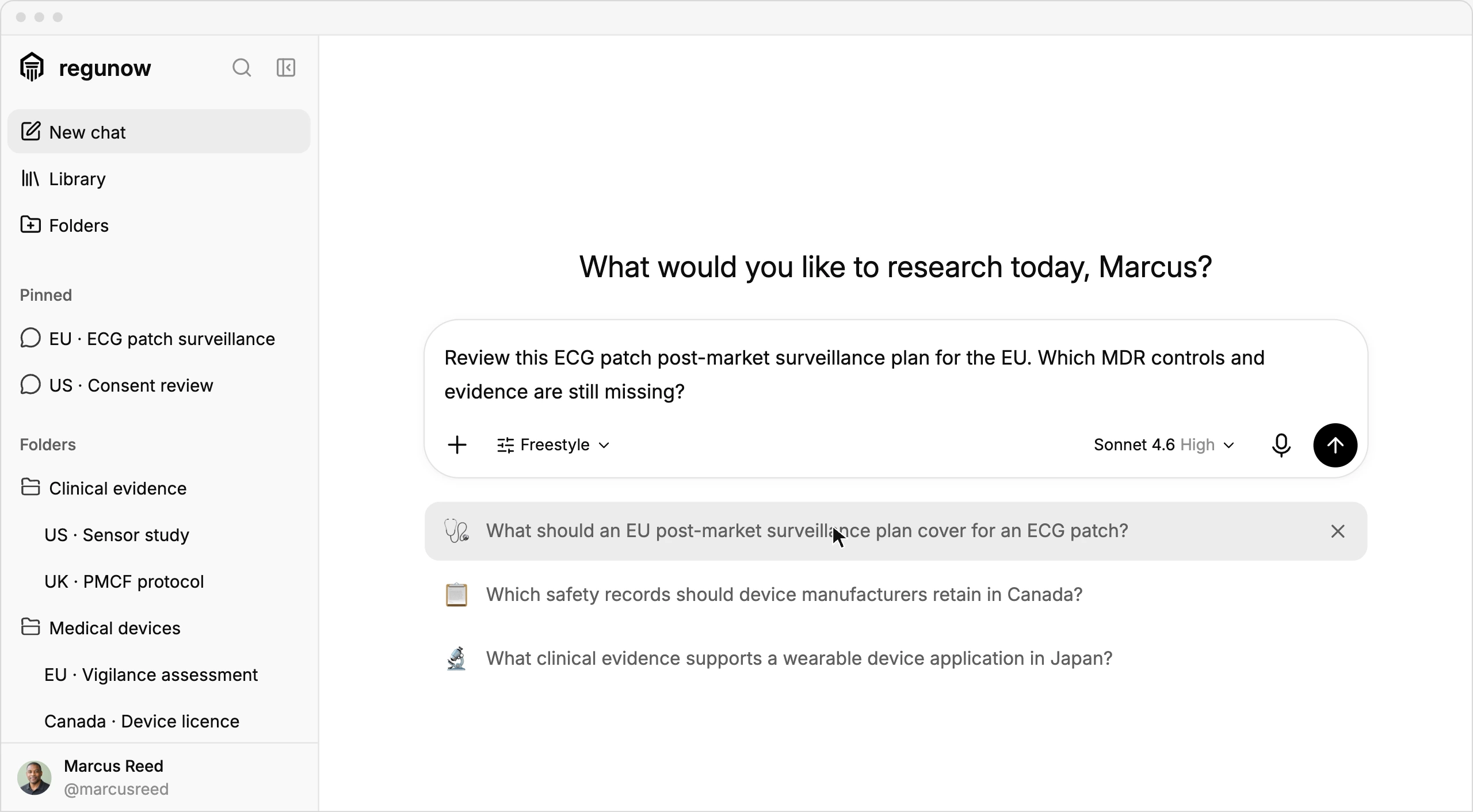
A diagnostic, medicine, device, or care service starts with a different regulatory question. Explore the route that fits your intended use, claims, users, and target market.
Examine a protocol, product description, or quality document alongside retrieved regulatory passages. Ask which claims the evidence supports and what still needs substantiation.
Research the obligations that connect development, authorization, supply, and post-market oversight. Preserve the source references behind a briefing for clinical, quality, or regulatory colleagues.
Investigate classification, conformity assessment, labeling, and vigilance for a specific device. Ask how intended purpose, invasiveness, software functionality, or an accessory relationship affects the analysis.
Distinguish requirements for an in vitro diagnostic from those for the laboratory using it. Research performance evidence, specimen handling, laboratory oversight, and the claims made about a result.
Explore authorization, manufacturing, distribution, and pharmacovigilance questions for medicines. Relate the research to dosage form, manufacturing activities, supply arrangements, and the market under consideration.
Examine the regulatory treatment of biologics, cell and gene therapies, and biotechnology processes. Investigate how product characteristics shape evidence, manufacturing controls, and biosafety considerations.
Research study authorization, informed consent, ethics review, and safety reporting. Structure a protocol discussion around the investigational product, study population, sponsor, and participating locations.
Help hospitals, clinics, and digital-care businesses explore service licensing, professional responsibilities, patient information, and record handling. Distinguish care-delivery requirements from the rules governing the products used.