Know how regulation affects the technology you build

Understand how data use, AI functionality, and deployment choices affect your obligations. Regunow helps software and technology businesses investigate the rules and prepare informed discussions with product, privacy, and security teams.

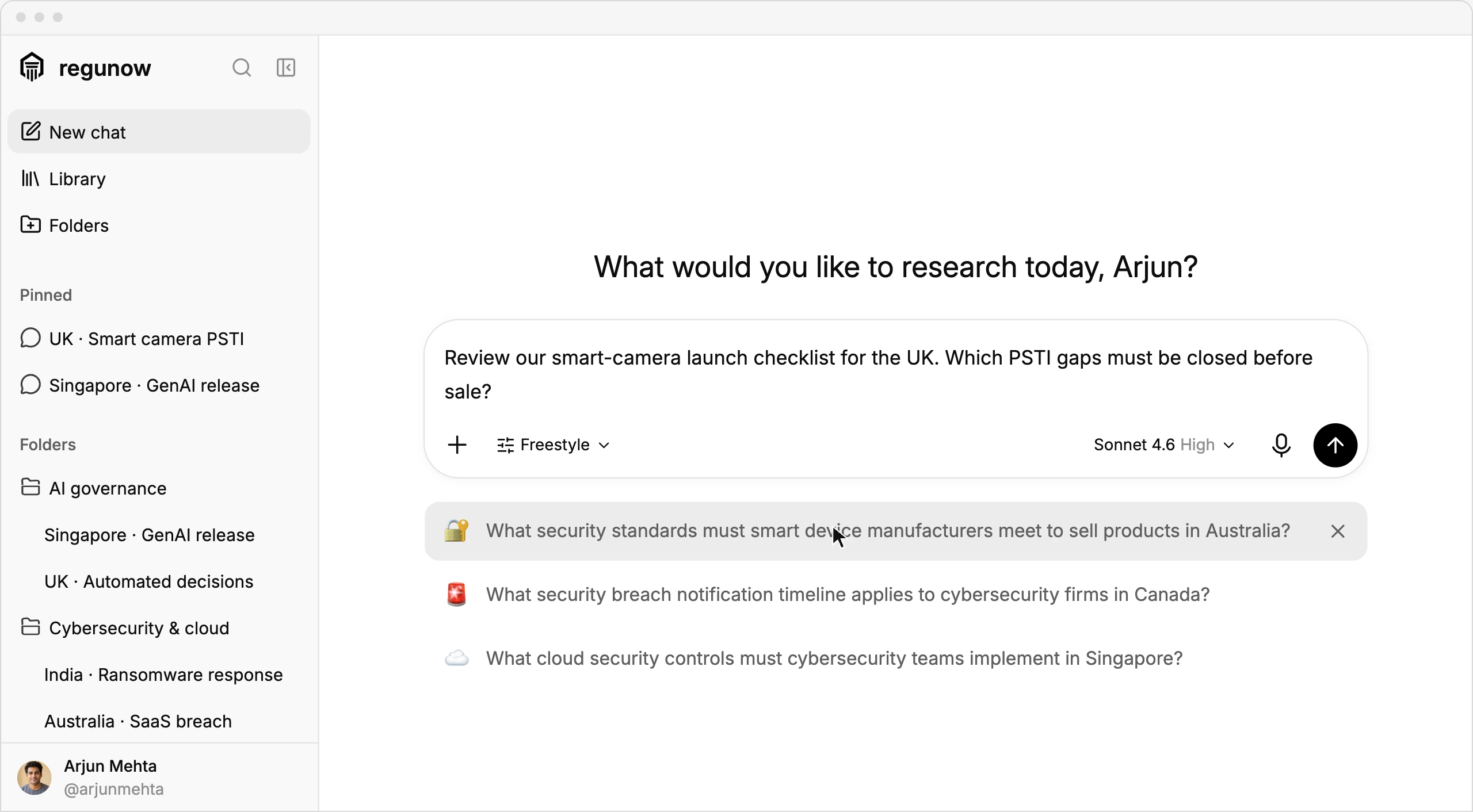
Preview of the Regunow regulatory research workspace

AI, data and digital-service frameworks

  • European Union: GDPR
  • United States: CCPA (California)
  • China: PIPL
  • Brazil: LGPD
  • Japan: APPI
  • United Kingdom: UK GDPR
  • India: DPDP Act
  • Singapore: PDPA
  • South Korea: PIPA
  • Canada: PIPEDA
  • Australia: Australian Privacy Act
  • Switzerland: FADP
  • Hong Kong: PDPO
  • Saudi Arabia: PDPL
  • United Arab Emirates: PDPL
  • Indonesia: PDP Law
  • Mexico: LFPDPPP
  • Taiwan: Personal Data Protection Act
  • Vietnam: Personal Data Protection Law
  • European Union: AI Act
  • United States: NIST CSF
  • European Union: NIS2
  • European Union: Cyber Resilience Act
  • European Union: DORA
  • United States: NIST AI RMF
  • European Union: Digital Services Act
  • European Union: Data Act
  • European Union: Product Liability Directive (2024)
  • China: Cybersecurity Law
  • China: Data Security Law
  • Singapore: Cybersecurity Act
  • United Kingdom: Online Safety Act
  • European Union: Digital Markets Act
  • European Union: eIDAS
  • European Union: ePrivacy Directive
  • United States: HIPAA privacy and security
  • United States: Grammโ€“Leachโ€“Bliley Act (GLBA)
  • United Kingdom: Connected-product security
  • United States: FCC equipment authorization
  • European Union: Radio Equipment Directive

Make the regulatory questions part of your technology decisions

Identify the features and activities that trigger obligations

For software vendors, AI developers, and digital-service businesses, obligations depend on what the technology does. Start with its users, data, deployment model, and the role your company plays.

Relate the system architecture to the regulatory question

Examine a system description or data-flow document against retrieved rules. Connect hosting, access, supplier dependencies, and automated decisions to the questions your reviewers need answered.

Distinguish a legal duty from a recommended practice

Explore how legislation, regulator guidance, and voluntary frameworks relate to a deployment. Inspect the cited passages before turning a recommendation into a product requirement or customer commitment.

Explore the duties behind AI, data, software, and connected services

Artificial intelligence

Assess AI obligations around the system's actual use

Examine provider and deployer roles, use-case classification, transparency, and human oversight. Keep application dates and transitions in view when researching a proposed AI feature or internal use.

Data & privacy

Follow personal data through collection, use, and transfer

Work through collection, reuse, retention, individual rights, and international transfers. Give the research a specific data subject, purpose, destination, and controller or processor relationship.

Cybersecurity

Prepare the regulatory questions behind a security incident

Investigate security governance, vulnerability handling, and incident-notification requirements. Draft questions about affected services, reportable events, responsible authorities, and the evidence needed to assess timing.

Cloud & data centers

Understand how a cloud arrangement changes each party's duties

Research hosting location, supplier access, resilience, and sector-specific outsourcing obligations. Explore how a cloud arrangement affects the customer and provider without assuming a certification settles every requirement.

Software & SaaS

Connect your software business model with the relevant rules

Connect online-service, platform, consumer-protection, and connected-product rules to the business model. Clarify which obligations arise from the service itself and which follow from its users or customers.

Telecommunications

Separate equipment authorization from permission to provide telecom services

Distinguish equipment authorization and spectrum questions from telecom-service licensing. Research the relevant market using the device characteristics, network function, and activities the business intends to perform.

Ask which regulations apply to your technology

Start researching